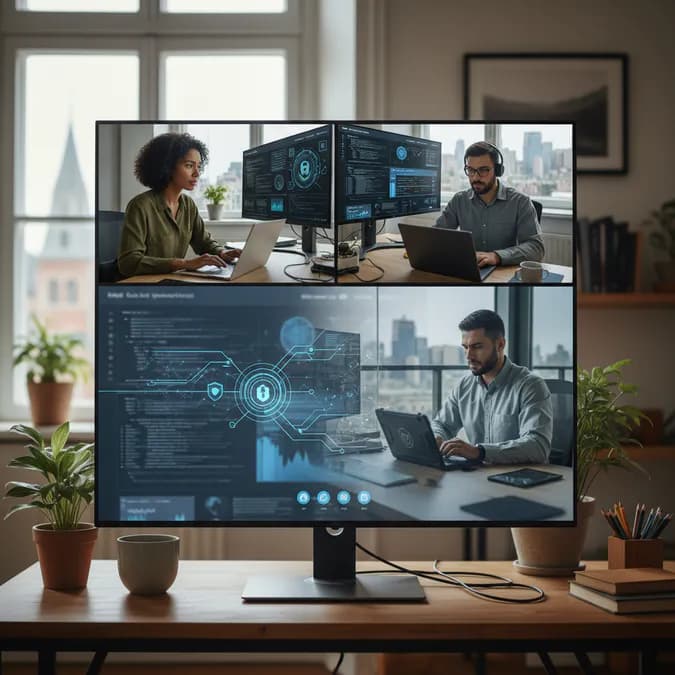
The Shift to Remote Work


Remote work, once a privilege for a select few, has become a standard practice for many organizations worldwide. The COVID-19 pandemic accelerated this trend, forcing companies to adapt quickly to a remote working model. Employees enjoyed the flexibility and convenience of working from home, leading to a reevaluation of traditional office spaces.
Changing Attitudes Toward Office Spaces
As employees experienced the benefits of remote work, such as reduced commute times and increased work-life balance, many began to question the necessity of physical office spaces. Companies, in turn, recognized that productivity could be maintained, or even enhanced, outside the traditional office environment. This shift in attitude has led to a decline in demand for office spaces, particularly in urban centers.
Declining Demand for Office Spaces
The decline in demand for office spaces has been particularly pronounced in major metropolitan areas, where high rents and the costs associated with maintaining large office buildings have become less justifiable. Businesses are now considering alternative arrangements, such as:
- Flexible workspaces
- Co-working spaces
- Hybrid work models
- Remote-only positions
As a result, many companies are downsizing their office footprints or opting for short-term leases, which has contributed to a surplus of available office space.
Impact on Office Prices
The oversupply of office spaces has led to a decrease in rental prices in many urban areas. Landlords are now facing challenges in filling vacancies, prompting them to offer incentives such as reduced rents, flexible lease terms, and improved amenities to attract tenants. This trend has resulted in:
- Lower average rental prices
- Increased vacancy rates
- Greater competition among landlords
According to recent reports, some cities have seen office rental prices drop by as much as 20% compared to pre-pandemic levels. This decline has significant implications for both landlords and businesses.
Implications for Businesses
For businesses, the decline in office prices presents both opportunities and challenges. On one hand, companies can benefit from reduced overhead costs, allowing them to allocate resources to other areas, such as employee development or technology investments. On the other hand, the shift away from traditional office spaces raises questions about company culture, collaboration, and employee engagement.
Maintaining Company Culture
As businesses adopt remote or hybrid work models, maintaining a strong company culture becomes increasingly important. Companies must find innovative ways to foster collaboration and connection among employees who may be working in different locations. Strategies may include:
- Regular virtual team meetings
- Employee engagement activities
- Investing in collaboration tools
By prioritizing company culture, businesses can ensure that employees remain engaged and motivated, regardless of their physical work environment.
The Future of Office Spaces
As the landscape of remote work continues to evolve, the future of office spaces remains uncertain. However, several trends are emerging that may shape the future of commercial real estate:
- Flexible Workspaces: The demand for flexible workspaces is likely to increase as companies seek to accommodate a mix of remote and in-office employees.
- Redesigning Office Spaces: Offices may be reimagined to prioritize collaboration and social interaction, with open layouts and communal areas.
- Technology Integration: The integration of technology in office spaces will become crucial for facilitating remote collaboration and communication.
Ultimately, the future of office spaces will depend on how businesses adapt to the changing needs of their employees and the evolving nature of work.
Key Takeaways
- Remote work has fundamentally changed the demand for office spaces.
- Companies are exploring flexible and hybrid work models to adapt.
- Office prices are declining due to oversupply and changing business needs.
- Maintaining company culture is crucial in remote and hybrid environments.
- The future of office spaces will focus on flexibility and technology integration.
Conclusion
The impact of remote work on office prices is profound and far-reaching. As businesses and employees continue to embrace flexible work arrangements, the demand for traditional office spaces is likely to remain subdued. Companies must navigate the challenges and opportunities presented by this shift, focusing on maintaining company culture and adapting to the changing landscape of work. The future of office spaces will undoubtedly be shaped by these evolving dynamics, paving the way for a new era in commercial real estate.
Frequently Asked Questions (FAQ)
How has remote work affected office prices?
Remote work has led to a decrease in demand for traditional office spaces, resulting in lower rental prices and increased vacancy rates in urban areas.
What are the benefits of remote work for employees?
Employees benefit from reduced commute times, increased work-life balance, and greater flexibility in their work schedules.
What strategies can companies use to maintain culture in a remote environment?
Companies can foster culture through regular virtual meetings, employee engagement activities, and investing in collaboration tools.
What does the future hold for office spaces?
The future of office spaces will likely focus on flexibility, redesign for collaboration, and technology integration to support remote work.
References
For further reading, consider exploring authoritative sources such as Forbes and McKinsey & Company for insights on the evolving nature of work and its implications.