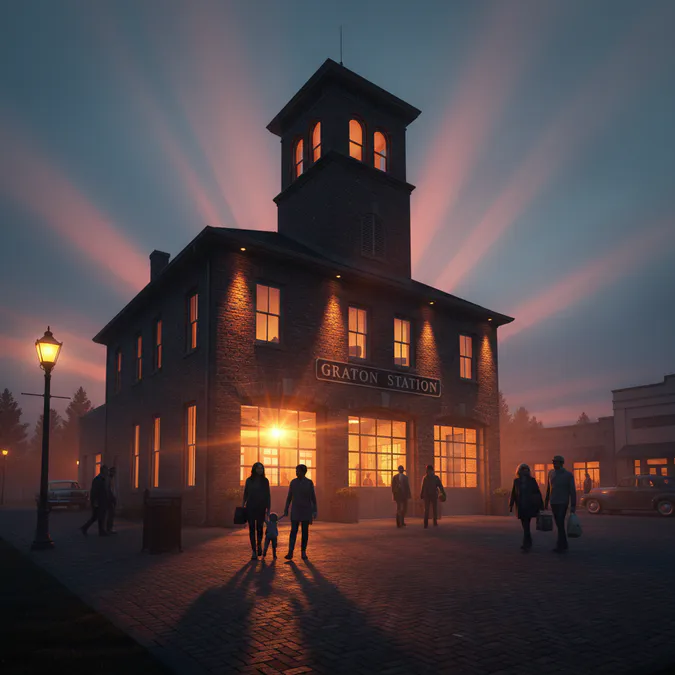
Graton Station coworking, scheduled to open in 2026, represents a significant shift in how rural communities approach flexible workspaces and community gathering. Located in the small village of Graton in Sonoma County, California, this new coworking facility is being developed within a renovated historic firehouse and promises to redefine what modern workspaces can be beyond traditional desk rentals.
The project emerges at a critical moment when remote work has fundamentally changed where people can live and work. Unlike urban coworking spaces that prioritize individual productivity, Graton Station emphasizes community integration, combining functional workspaces with event hosting, networking opportunities, and a planned cafe that will serve local entrepreneurs, remote workers, and residents.
What makes Graton Station particularly noteworthy is its role in addressing a genuine gap in Sonoma County's West County region. This area, known for its agricultural heritage and tourism appeal, has historically lacked central community hubs. Remote workers and small business owners have faced long commutes to urban centers or struggled to find professional spaces for meetings and collaboration. Graton Station directly addresses these challenges while contributing to broader regional revitalization efforts.
The initiative reflects a growing national trend toward multi-functional spaces that blend work, social connection, and professional growth. For Sonoma County's business community, Graton Station represents an opportunity to strengthen local economic resilience while reducing commute times and fostering meaningful professional connections.
The Vision Behind Graton Station
Graton Station's development story begins with a long-term community vision. The building itself—a historic firehouse—was purchased by George and Lisa Melo 13 years ago. Over more than a decade, the Melos invested significant time and resources into renovating and rehabilitating the structure, always envisioning it could become a community institution.
T
This philosophy distinguishes Graton Station from typical coworking operators. Rather than focusing solely on desk rentals and membership fees, the organizers are designing a space that serves multiple functions: a gathering place for coffee and conversation, a professional workspace for remote workers, a venue for community events, and a networking hub for local entrepreneurs.
The Graton Station team has already begun building momentum. In August and September 2024, they hosted pop-up events in the old firehouse space to gauge community interest and test concepts. These early activations helped validate demand and refine the vision for the full launch.
The Historic Firehouse Foundation
The choice of a historic firehouse as the location for Graton Station carries symbolic weight. Firehouses have traditionally served as community gathering places—spaces where neighbors meet, events are held, and community bonds are strengthened. By repurposing this historic structure, Graton Station honors the building's community legacy while adapting it for contemporary needs.
Jorgensen noted the significance of the Melos' long-term stewardship: "The building was bought by George and Lisa Melo 13 years ago, and they've done a lot of renovation and rehab work on it and have always kind of dreamed that it would be some sort of community institution like this." [Source: Sebastopol Times] This patient, long-term approach to community development stands in contrast to typical commercial real estate development focused on rapid returns.
A Catalyst for Community Revitalization
Graton Station doesn't exist in isolation. It's part of a broader revitalization effort transforming the village of Graton into a more vibrant community hub. The adjacent Graton Town Square project exemplifies this coordinated approach to community development.
Graton Town Square is a 0.6-acre public gathering space built on a site that was formerly occupied by a gas station. The Graton Community Services District secured this land through a combination of public and private funding. The project received $750,000 in grant funding from Sonoma County Ag + Open Space, with additional support from private donations and community contributions. [Source: Ag + Open Space Press Release]
This $750,000 grant was part of a larger regional investment. In December 2024, Sonoma County Ag + Open Space announced funding for seven new community open space projects across the county, totaling $6,844,426. Graton Town Square represented one of the most significant individual projects in this portfolio, reflecting the county's commitment to equity-driven community infrastructure. [Source: Ag + Open Space Press Release]
Coordinated Development Strategy
The timing of these projects is strategic. Graton Town Square was targeted for activation in late 2025, positioning it to complement Graton Station's 2026 opening. Together, these projects create a genuine community destination—a place where people can work, gather, socialize, and participate in events.
This coordinated approach demonstrates sophisticated community planning. Rather than developing projects in isolation, Graton's leaders recognized that complementary facilities would amplify the impact of each individual project. A town square without nearby workspaces and gathering places would serve limited functions. A coworking space without adjacent public gathering areas would miss opportunities for community integration. Together, they create a vibrant ecosystem.
The funding structure also reflects regional priorities. The $6.8 million investment in seven community open space projects across Sonoma County signals that county leadership views community infrastructure as essential to regional resilience and quality of life. By supporting projects like Graton Town Square and, indirectly, Graton Station, the county is investing in the conditions that attract and retain residents, support entrepreneurship, and strengthen community bonds.
Addressing the Remote Work Revolution
Graton Station's development reflects broader economic and social shifts triggered by the pandemic and the normalization of remote work. For years, conventional wisdom held that remote workers needed to live near major urban centers to access professional workspaces and networking opportunities. Graton Station challenges this assumption.
Sonoma County's West County region, while beautiful and increasingly attractive to remote workers seeking quality of life, has historically lacked the infrastructure to support this demographic. Professionals working remotely from home faced isolation and limited options for professional meetings or collaborative work. Small business owners struggled to find affordable, professional spaces for client meetings or team gatherings.
Graton Station directly addresses these pain points. By providing dedicated coworking desks, meeting rooms, and event space in a community-oriented setting, the facility enables remote workers to maintain professional productivity while staying connected to their local community. For entrepreneurs and small business owners, it offers affordable alternatives to expensive urban office space while providing the networking and collaboration opportunities that drive business growth.
The Cafe as Professional Hub
The facility's planned cafe adds another dimension to this value proposition. Coffee shops have long served as informal business hubs where professionals meet, collaborate, and build relationships. By integrating a cafe into Graton Station, the organizers are intentionally creating spaces for both formal and informal professional interaction.
This reflects a broader understanding of how modern professionals work. The traditional model of office-based work has given way to a more fluid approach where professionals move between focused work, collaborative meetings, and informal networking. A well-designed coworking space with an integrated cafe supports all these modes of work.
For Graton residents and visitors, the cafe serves additional functions. It becomes a gathering place for community members, a venue for casual social interaction, and a business that generates local employment. This multi-functionality is central to Graton Station's sustainability model.
The Business Model: Sustainability Through Community Integration
What distinguishes Graton Station's approach is its explicit commitment to sustainability and community benefit. Rather than maximizing short-term profits through aggressive membership pricing, the organizers are designing a business model that prioritizes long-term viability and community value.
This philosophy is evident in Jorgensen's statement about building "an interesting creative hub that can be profitable, that can be sustainable, as a community pillar." The emphasis on sustainability suggests a business model that balances revenue generation with community service—a challenging but increasingly important approach in rural development.
Diversified Revenue Streams
The multi-functional design supports this model. Revenue streams will likely include coworking memberships, meeting room rentals, cafe sales, and event hosting fees. By diversifying revenue sources, Graton Station reduces dependence on any single income stream and creates resilience against market fluctuations.
This approach contrasts with traditional coworking spaces that rely heavily on membership fees. When a significant portion of revenue comes from a single source, the business becomes vulnerable to changes in that market. A downturn in demand for coworking memberships could threaten the entire operation. By developing multiple revenue streams, Graton Station builds in redundancy and flexibility.
Moreover, the community-focused approach builds loyalty and word-of-mouth marketing. When a business genuinely serves community needs and contributes to local vibrancy, it attracts sustained support from residents and businesses alike. This organic support is more stable and cost-effective than marketing-driven customer acquisition.
Community Ownership and Engagement
The pop-up events conducted in August and September 2024 served multiple purposes beyond simply testing concepts. They built community awareness, generated excitement, and created opportunities for potential users to provide input on the final design. This participatory approach to development increases the likelihood that the final facility will meet actual community needs.
Community engagement also creates a sense of ownership. When residents feel they've contributed to a project's development, they're more likely to support it, use it, and advocate for it. This grassroots support is invaluable for long-term success.
Implications for Sonoma County's Business Landscape
Graton Station's development has broader implications for how Sonoma County supports entrepreneurship, remote work, and community economic development. The project demonstrates that rural areas can successfully compete for remote workers and entrepreneurs by offering something urban centers cannot: authentic community connection, lower costs, and quality of life.
For remote workers considering relocation, Graton Station signals that West County is becoming a viable alternative to urban centers. The combination of professional workspace, networking opportunities, and community amenities makes it possible to maintain career momentum while enjoying rural living.
For entrepreneurs and small business owners, Graton Station offers affordable professional infrastructure. Rather than investing in private office space, business owners can access shared facilities, meeting rooms, and a built-in network of potential collaborators and clients.
Regional Economic Resilience
For the broader Sonoma County economy, Graton Station contributes to regional resilience. By supporting remote workers and entrepreneurs in rural areas, the facility helps distribute economic activity beyond urban centers, strengthening communities and reducing pressure on congested urban areas.
This distribution of economic opportunity has multiple benefits. It reduces housing pressure in urban centers, supports local businesses in rural areas, and strengthens the social fabric of smaller communities. When remote workers and entrepreneurs choose to live in Graton, they spend money locally—at cafes, restaurants, retail shops, and service providers. They participate in community life, volunteer for local organizations, and contribute to civic engagement.
Alignment with County Priorities
The project also aligns with Sonoma County's stated commitment to equity-driven community infrastructure. The $6.8 million investment in seven community open space projects reflects a deliberate strategy to ensure that quality community facilities and gathering spaces are available throughout the county, not just in wealthy urban neighborhoods.
This commitment to equity is particularly important in rural areas like West County, which have historically received less investment in public infrastructure and community amenities. By supporting projects like Graton Town Square and enabling projects like Graton Station, the county is working to ensure that all residents have access to quality community spaces and professional infrastructure.
What's Next: The Path to 2026
As Graton Station coworking moves toward its 2026 opening, several milestones will shape the project's success. The completion of Graton Town Square in late 2025 will create momentum and demonstrate the viability of community-focused development in Graton. The continued renovation and preparation of the firehouse space will require coordination with the Melos and careful planning to balance historic preservation with modern functionality.
The organizers will also need to finalize operational details: membership pricing, cafe menu and operations, event scheduling, and marketing strategy. The pop-up events conducted in 2024 provided valuable feedback that should inform these decisions.
Critical Success Factors
Community engagement will remain critical. The success of Graton Station depends on sustained support from local residents, remote workers, and entrepreneurs. Continued communication about the project's progress and opportunities to participate will help build the community ownership necessary for long-term success.
The organizers will also need to carefully manage expectations and deliver on promises. If Graton Station successfully opens with quality facilities, responsive management, and genuine community focus, it will validate the model and potentially inspire similar projects in other rural areas. If it struggles operationally or fails to deliver on its community mission, it could discourage future community-focused development efforts.
The relationship with the Melos and the historic firehouse will also be important. Successful adaptive reuse of historic buildings requires balancing preservation with functionality. The organizers will need to ensure that the renovated space honors the building's history while providing modern amenities that users expect.
Broader Implications
Graton Station's success will also have implications for how other rural communities approach economic development and community building. If the project succeeds in attracting remote workers, supporting entrepreneurs, and strengthening community bonds, it will demonstrate a viable model for rural revitalization that doesn't depend on large-scale industrial development or tourism.
This model—combining professional infrastructure with community gathering spaces and local business support—could be adapted to other rural communities facing similar challenges. The specific details would vary based on local conditions and needs, but the underlying philosophy of community-focused, multi-functional development could be broadly applicable.
Graton Station represents a thoughtful response to genuine community needs and broader economic shifts. By combining coworking space, cafe culture, event hosting, and networking opportunities, the facility offers something rare in rural areas: professional infrastructure designed with community benefit in mind.
The project's success will depend on execution—delivering quality workspace, genuine community value, and sustainable business operations. If successful, Graton Station could serve as a model for other rural communities seeking to support remote workers and entrepreneurs while strengthening local economic resilience.
For Sonoma County's business community, Graton Station represents an opportunity to access professional workspace and networking in a vibrant, community-focused setting. For remote workers and entrepreneurs considering relocation to West County, it signals that the infrastructure and community support necessary for professional success are becoming available.
As Graton Station moves toward its 2026 opening, it will be worth watching as a case study in how rural communities can adapt to the remote work revolution while strengthening local community bonds and economic opportunity.
Key Takeaways
Graton Station coworking is set to redefine rural workspaces by:
- Providing a community-focused hub for remote workers and entrepreneurs.
- Integrating a cafe to foster professional networking and social interaction.
- Offering a sustainable business model that prioritizes community engagement.
- Contributing to regional economic resilience and revitalization efforts.
Frequently Asked Questions
What is Graton Station coworking?
Graton Station coworking is a community-focused workspace set to open in 2026, located in a renovated historic firehouse in Graton, Sonoma County.
How will Graton Station benefit the local community?
It will provide a professional workspace, networking opportunities, and a cafe, all designed to foster community engagement and support local entrepreneurs.
When is Graton Station expected to open?
Graton Station is scheduled to open in 2026, with ongoing developments leading up to its launch.
What types of services will Graton Station offer?
Services will include coworking desks, meeting rooms, event spaces, and a cafe for both professional and community use.
How can I get involved with Graton Station?
Community members can participate in ongoing events and provide feedback to help shape the final design and offerings of Graton Station.