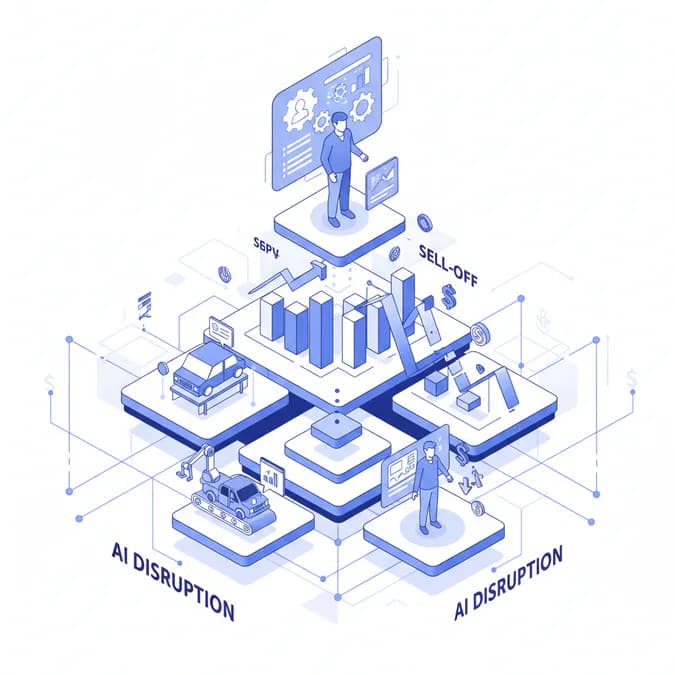
As artificial intelligence (AI) continues to evolve, it brings both opportunities and challenges to various industries. Recently, Wall Street has experienced a notable stock sell-off, driven by investor concerns about the disruptive potential of AI technologies. This article delves into the implications of AI advancements on traditional business models and the resulting market reactions.
Overview of AI Disruption
AI is reshaping the landscape of numerous sectors, from finance to logistics. The technology promises increased efficiency, reduced costs, and enhanced decision-making capabilities. However, with these advancements come fears of obsolescence for established business practices and job roles. Investors are increasingly wary of how quickly AI could render traditional


Impact on Stock Market
The recent sell-off on Wall Street highlights the growing anxiety surrounding AI's impact on stock performance. According to Yahoo Finance, sectors such as wealth management, transportation, and logistics have been particularly affected. Investors are re-evaluating their portfolios, leading to a decline in stock prices as they anticipate potential disruptions caused by AI implementations.
- Wealth Management: Traditional financial advisory roles may be threatened by AI-driven robo-advisors, which can provide personalized investment advice at a fraction of the cost.
- Transportation: Companies in this sector are facing pressure as autonomous vehicles and AI logistics solutions promise to streamline operations, potentially reducing the need for human labor.
- Logistics: AI technologies are optimizing supply chains, which could lead to significant job losses and a rethinking of current logistics strategies.
Industry-Specific Analysis
The ramifications of AI disruption are not uniform across all industries. Here’s a closer look at how specific sectors are responding:
- Wealth Management: The rise of AI in this sector is prompting firms to invest in technology to stay competitive. Traditional firms may need to adapt or risk losing clients to more tech-savvy competitors.
- Transportation: Major players are exploring AI for route optimization and fleet management. However, the potential for job displacement raises ethical concerns that companies must address.
- Logistics: AI is being leveraged to enhance inventory management and predictive analytics, but the transition could lead to significant operational overhauls and workforce reductions.
As these industries grapple with the implications of AI, the stock market's volatility reflects the uncertainty surrounding these changes. Investors are weighing the risks and rewards, leading to fluctuating stock prices.
Conclusion
The stock sell-off on Wall Street serves as a stark reminder of the dual-edged nature of AI technology. While it holds the promise of innovation and efficiency, it also poses significant risks to established business models and employment. As industries adapt to these changes, investors must remain vigilant, continuously assessing the evolving landscape of AI and its potential to disrupt traditional practices. Understanding these dynamics will be crucial for navigating future market fluctuations and making informed investment decisions.