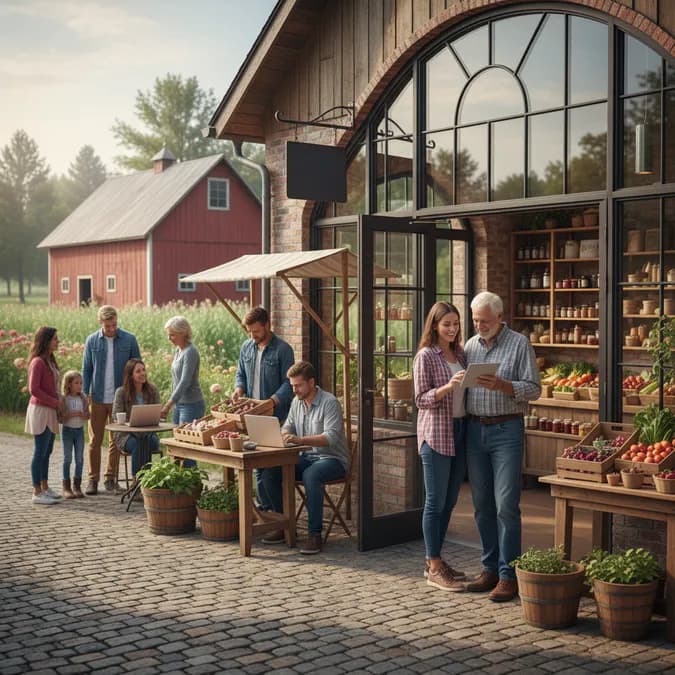
Understanding Family Farming
Family farming refers to agricultural operations that are managed and operated by families. This model not only sustains livelihoods but also contributes significantly to local economies and food systems. However, family farming is currently at a crossroads, influenced by demographic shifts and changing societal values.
Key Takeaways
Family farming is facing significant challenges due to demographic shifts, but opportunities for innovation exist. By embracing new practices and technologies, family farms can thrive.
Challenges Facing Family Farming
The current landscape of agriculture is marked by a significant demographic shift impacting family farming. According to a report by the Hindustan Times, many farmers are now in their 50s and 60s, with their children showing little interest in continuing the family business. This trend is particularly pronounced in the United States, where the average age of farmers has risen to 57 years old.
- Declining interest among youth in agriculture careers.
- High operational costs and financial pressures on family farms.
- Increased competition from large agribusinesses.
As a result, many family farms are struggling to remain viable. The grueling demands of farming, including long hours and unpredictable weather, deter younger generations from pursuing this path. Additionally, the financial burden of maintaining a farm can be overwhelming, leading to a decline in the number of family-owned farms.
Opportunities for Innovation in Family Farming
Despite these challenges, there are numerous opportunities for innovation within the family farming sector. Some family farmers are adapting by diversifying their operations and embracing new technologies. For example, precision agriculture techniques, which utilize data analytics and GPS technology, can help farmers optimize their yields and reduce costs.
- Implementing sustainable farming practices to attract eco-conscious consumers.
- Exploring agritourism aa supplementary income source.
- Utilizing social media and online platforms to market products directly to consumers.
These strategies not only enhance profitability but also engage younger generations who may be interested in innovative farming approaches. According to agricultural a business management consultant, "The future of family farming lies in its ability to adapt and innovate. By leveraging technology and community support, family farms can thrive in a competitive market." This sentiment is echoed by various experts in the field, emphasizing the need for family farms to embrace change.
Future Outlook for Family Farming
The future of family farming remains uncertain, but there is potential for revitalization. As consumers increasingly prioritize local and sustainable food sources, family farms may find new markets for their products. According to the Hindustan Times, initiatives that support young farmers through grants and educational programs could help bridge the gap between generations.
Moreover, community-supported agriculture (CSA) models are gaining traction, allowing consumers to invest directly in local farms. This not only provides farmers with upfront capital but also fostera stronger connection between producers and consumers.
In conclusion, while the aging farmer demographic presents significant challenges, it also opens the door for innovation and new business models in agriculture. By embracing change and leveraging community support, family farms can continue to thrive in an evolving landscape.
Frequently Asked Questions
What are the main challenges facing family farming today?
The main challenges include an aging farmer demographic, declining interest among youth in agriculture, high operational costs, and competition from large agribusinesses.
How can family farms innovate to survive?
Family farms can innovate by diversifying operations, adopting sustainable practices, and utilizing technology such as precision agriculture.
What is the future outlook for family farming?
The future outlook is cautiously optimistic, with potential for revitalization through community support and increased consumer demand for local, sustainable food sources.